Paul Sommerfeld, Senior Music Reference Specialist at the Library of Congress, outlines strategies for archival research at the Library and institutions with similarly vast collections.
The breadth and depth of material in an archive like the Library of Congress can intimidate even the most intrepid researcher. Often dispersed into multiple spaces (the Library has seventeen separate reading rooms) that can and do overlap in content, material types, and subjects, an archival repository offers a wealth of potential if you know where—and how—to look. Understanding an archive’s internal logic can be half the battle.
I’d like to demonstrate how research at the Library of Congress often encourages—even requires—visiting multiple spaces as well as thinking from different perspectives. Drawing examples from my own expertise in film and television music, I’ll offer some research strategies that will help you navigate this and similarly robust archives. Let’s dive in!
Strategy #1: Think About Format
The Library in general divides materials by subject area—but also by format, such as books, scores, sound recordings, and films. Books on music for film and television are accessed through the Performing Arts Reading Room, as are physical scores. Meanwhile, books on film and television must be requested and viewed in the Main Reading Room. If you want to hear recordings of film music, which in some instances include studio sessions or master tapes, you’ll need to visit the Recorded Sound Research Center. But if you want to view filmed materials (especially anything on original reels), you’ll need to set up an appointment in the Moving Image Research Center. Depending on their copyright status, some materials may even be available online.
Strategy #2: Think About Catalogs and Special Collections
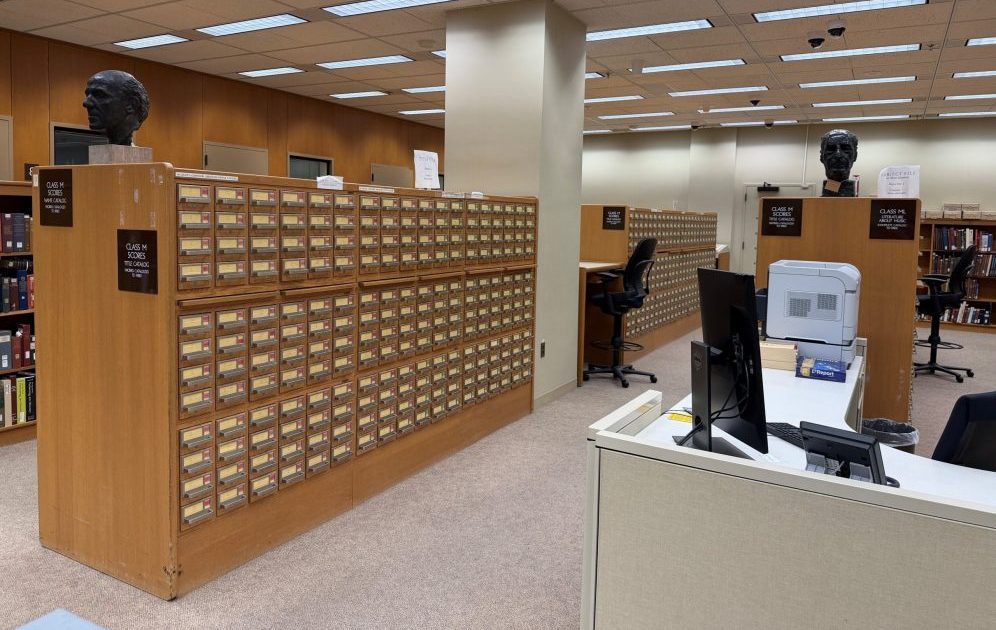
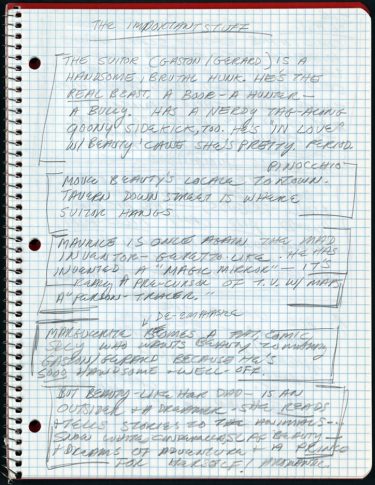
You’ll also want to consider what catalogs or special collections to explore. Through the Performing Arts Reading Room, you can access music manuscripts and sketches within composer collections like those of Erich Wolfgang Korngold, Henry Mancini, or Laura Karpman. Conversely, the Howard Ashman Papers document the songwriting process for several beloved animated film musicals, including The Little Mermaid (1989) and Beauty and the Beast (1991). Collections can likewise contain correspondence, photographs, and other papers that document a composer’s personal life and professional activities. The recently acquired archive of Score Productions, Inc. similarly holds manuscript scores for gameshows, sports, and other broadcast television programming. But other scores for specific productions may be cataloged individually, or other collections might have correspondence with or simply mention a film score or composer. Some databases allow you to search across these collections, but only if they have feen fully rehoused and processed! For example, the Music Division holds thousands of film scores submitted for copyright that can be requested and viewed in the Performing Arts Reading Room. There are over 3,000 copyright deposits from the Walt Disney company alone, primarily from the company’s many film and television productions. Yet with the sheer volume of collection material, many scores (and recordings) are not even findable through the Library’s Online Catalog and require using on-site card catalogs or speaking with staff to locate them.
If you find yourself feeling overwhelmed sifting through these resources, remember that you can always ask a librarian for help.
Strategy #3: Think About Institutional Idiosyncrasies and Organization
The materials and spaces I’ve mentioned so far are some of the most obvious places to research film and/or television music in the Library. Yet materials relevant to these topics exist in many more reading rooms. Somewhat confusingly named, the Manuscript Reading Room houses collections of papers from actors like Jessica Tandy and Vincent Price and film directors like Rouben Mamoulian. Meanwhile, the European, Asian, African and Middle Eastern, and Hispanic reading rooms can help researchers navigate sources such as newspapers and periodicals from their respective regions in their own languages—which can be vitally important for tracing media reception in global communities. Similarly, although the Music Division holds many periodicals focused on music, others, such as The Dramatic Mirror, Motion Picture Magazine, or Films in Review, can only be accessed through the Newspaper and Current Periodical Reading Room.
Strategy #4: Think About Visual Materials and Ephemera
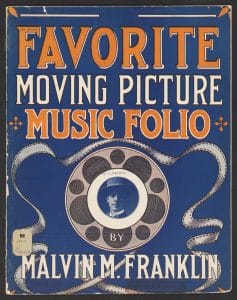
Researchers looking for visual marketing materials for film or television may need to visit as many as three different reading rooms. Collections in the Music Division may have advertisements, press releases, lobby cards, and photographs. The Prints and Photographs Reading Room, however, maintains an extensive collection of film posters—especially for international releases (have you ever wanted to see a Star Wars poster from Poland?). The reading room likewise holds collections of film animation stills and other artwork. The Moving Image Reference Center has its own collections of marketing materials and press releases, while the Recorded Sound Research Center has, among many relevant collections, NBC’s historic archive, which is filled with memos, press releases, and recordings of television broadcasts.
Strategy #5: Think About Geography
One may assume the Geography and Map Reading Room holds little material of interest to film or television music research. Yet the Sanborn collection of fire insurance maps could help visitors find the precise location of a destroyed movie theater, performing arts venue, or even film production site. This is just one of many examples of how research can take you in directions you’d not even imagined.
I could go on listing other ways of navigating an institution like the Library, but what I hope to have demonstrated here is the almost limitless potential—and unexpected directions—that exist for researchers of any background. The Library’s research guides on hundreds of topics, including music for film and television, help bring together these many threads, but only as a starting point. The Library’s collections hold untapped potential just waiting to be unlocked—all you have to do is take a look and ask.

Paul Allen Sommerfeld is a Senior Music Reference Specialist in the Library of Congress Music Division. He holds a PhD in musicology from Duke University and a master’s in library science from Catholic University. He has published on music for film and television, with multiple edited volume contributions in Routledge anthologies and articles in the Journal of the Society for American Music and Fontes Artis Musicae. He is currently the assistant editor for Fontes Artis Musicae and serves on the editorial board of the Journal of Film Music.