In this post, Dr. Dana Gorzelany-Mostak introduces Sounding the Nation at 250, an outreach initiative launched by the Society for American Music (SAM) marking the US semiquincentennial. Through its wide-ranging programming, Sounding the Nation at 250 offers innovative ways for humanists to strengthen the music-education pipeline, build community partnerships, and engage the general public.
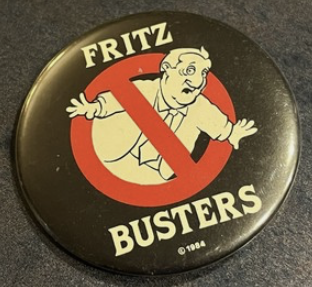
I skipped school on October 26, 1984. Not for a joyride to Pizza Hut, which I often did in high school, but to attend a Ronald Reagan campaign rally. I cannot recall any snippets of the incumbent candidate’s speech, but I do remember the music—a quartet in gray coveralls singing “Fritz Busters” to the tune of “Ghostbusters,” the eponymous song from the summer’s blockbuster film. The song cautioned voters against electing Walter “Fritz” Mondale, a “ghost” of administrations past. At the time, I was unaware of the long history of musical parodies in presidential campaigns, or the ways candidates harness the sounds, symbols, and rhetoric of pop culture to communicate their identities, values, and vision.
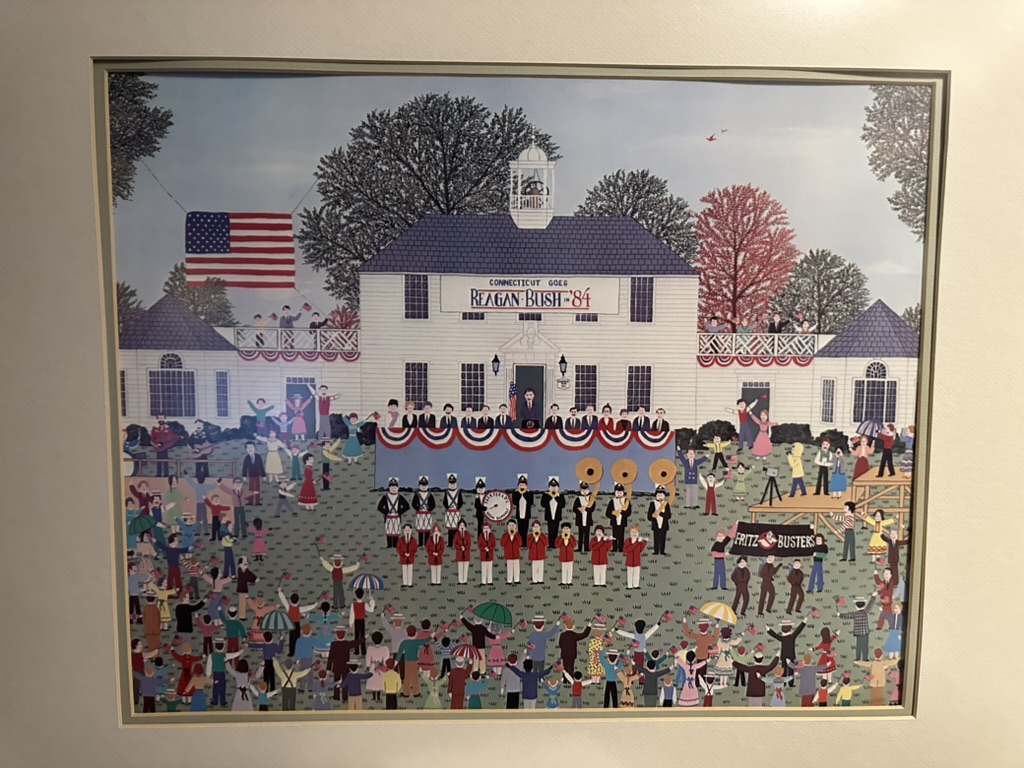
As a PhD student writing a dissertation on pop music and US presidential campaigns twenty-five years post-“Fritz,” I acquired the methodological toolbox that would allow me to make sense of candidates and their soundtracks. But the capacity to reflect critically on sound should not be restricted to academia or be the exclusive purview of career musicologists. It is of vital importance that the wider public develop a critical ear, attuned to the ways in which political candidates and other public figures harness sound as a tool to persuade the electorate. This commitment to education and outreach inspired my first foray into public musicology—Trax on the Trail, a website that tracks and catalogs the soundscapes of US presidential campaigns—and precipitated my involvement in Sounding the Nation at 250, a new project of the Society for American Music (SAM) that marks the US semiquincentennial.
With Sounding the Nation at 250, SAM members will deliver a nationwide series of lectures, recitals, and exhibits celebrating the rich and diverse musical heritage of the Americas. By meeting audiences where they are—in community and senior centers, libraries, churches, parks, outdoor gathering spaces, and public concert venues—the series aims to make scholarship on American music accessible, relevant, and meaningful to the public at large. The slate of events demonstrates how public-facing music scholarship can inform broad audiences about music’s central role in American cultural life, identity formation, the political imagination, and collective memory.
Events in Montgomery and Iowa City, for example, foreground music as a springboard for historical remembrance and civic reflection. The Montgomery Symphony Orchestra’s premiere of Nkeiru Okoye’s A Time for Jubilee honors the 1965 marches from Selma to Montgomery and explores themes of courage, resilience, and renewal. “Eleanor Waltzes: Women’s Music and Poetry for Eleanor Roosevelt During the Great Depression” revives an archive of music and verse sent to the First Lady by American women during the Great Depression, revealing how women’s creativity served as a powerful medium for expression and connection in a time of economic crisis. Meanwhile, events in Morgantown, West Virginia and Sanbornton, New Hampshire emphasize participatory music making as a form of community education. Combining archival materials, practitioner interviews, and group performance, “Mountaineering Voices: Appalachian Primitive Baptists and Congregational Singing in West Virginia” and “Seeking the Roots of Gospel Music in New England Architecture” demonstrate how tradition is sustained through embodied practice and invite audiences to sing, listen, and learn in historically significant spaces. The mobile exhibit “Documenting Punk and Go-go in the Nation’s Capital” in Washington, DC and the screening of the documentary Cincinnati Sounds: Exploring a Musical City’s Spaces, Places, and Sounds in Cincinnati, for their part, link music scenes to public space, migration, protest, and the preservation of neighborhood memory.
Collectively, these events and many others model myriad ways of engaging with the public through composition, archival recovery, participatory singing, multimedia storytelling, and community-centered exhibits. They also serve as a living testament to the fact that American identity is not only written in documents and preserved in monuments, but also sounded through voices, instruments, spaces, and shared listening. Sounding the Nation at 250 honors the artists, musicians, and other creators whose work has shaped American culture while also looking forward to a future in which the arts continue to foster creativity, connection, and shared civic life.
Musicologists (and other academics in humanities-based fields) are at a crossroads in the present moment—one where the humanities as a discipline and as a framework for inquiry are under assault from multiple angles—political, economic, technological, and ideological. While widespread disinvestment in the humanities may lead us to adapt, assimilate, or acquiesce, Sounding the Nation at 250 offers a model of meaningful public engagement. The vitality and sustainability of the humanities require us to cultivate a pipeline of future audiences and advocates, seek partnerships, and bring our work into the public sphere. Sounding the Nation at 250 does all three.
- Cultivate the pipeline in our schools: It is vital that students are exposed to the arts from an early age. With a few exceptions, Sounding the Nation at 250 events are free and open to the public. Moreover, all events and related materials will be archived on our website for educators to access in the future and integrate into classrooms, whether they be in music, social studies, history, media studies, language arts, or political science, to name just a few.
- Seek partners: The sustainability of the humanities is contingent upon establishing a robust network of partnerships. Sounding the Nation at 250 would not be possible without the infrastructure, resources, and financial support of our diverse group of partners, including cultural centers, universities, arts centers, research institutes, and community centers.
- Engage the public: We must dispel the problematic assumption that the humanities are exclusively tethered to the academy. Indeed, the humanities thrive when they are visible in the world and celebrated as an essential component of public life. This is why Sounding the Nation at 250 is intentional in its choice of spaces—libraries, parks, movie theaters, churches—and in its formats—performances, exhibits, participatory singing, films, and dialogue. Tell their history, and they will come.
The Society for American Music will continue to lean into what we do best. With Sounding the Nation at 250, we invite audiences to listen closely—to the sounds of the past, the voices of the present, and the possibilities of the future.
Interested in proposing an event? For guidelines, click here. Visit us at sam250.org.
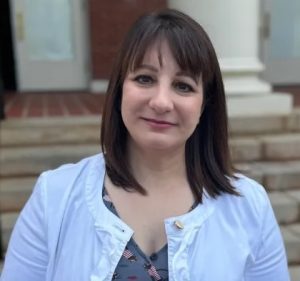
Dana Gorzelany-Mostak is a Professor of Music at Georgia College & State University. She is the founder of Trax on the Trail, a website and research project that tracks and catalogs the soundscapes of US presidential elections, and the author of Tracks on the Trail: Popular Music, Race, and the US Presidency (University of Michigan Press, 2023). Gorzelany-Mostak has provided her expert opinion for news outlets such as the BBC, CNN, The Guardian, The Washington Post, Newsweek, Slate, Vox, and Politico. She serves as Secretary for the Society for American Music and as co-organizer for Sounding the Nation at 250.